Choosing and Growing Weeping Japanese Maples in Ireland
Choosing a Weeping Japanese Maple
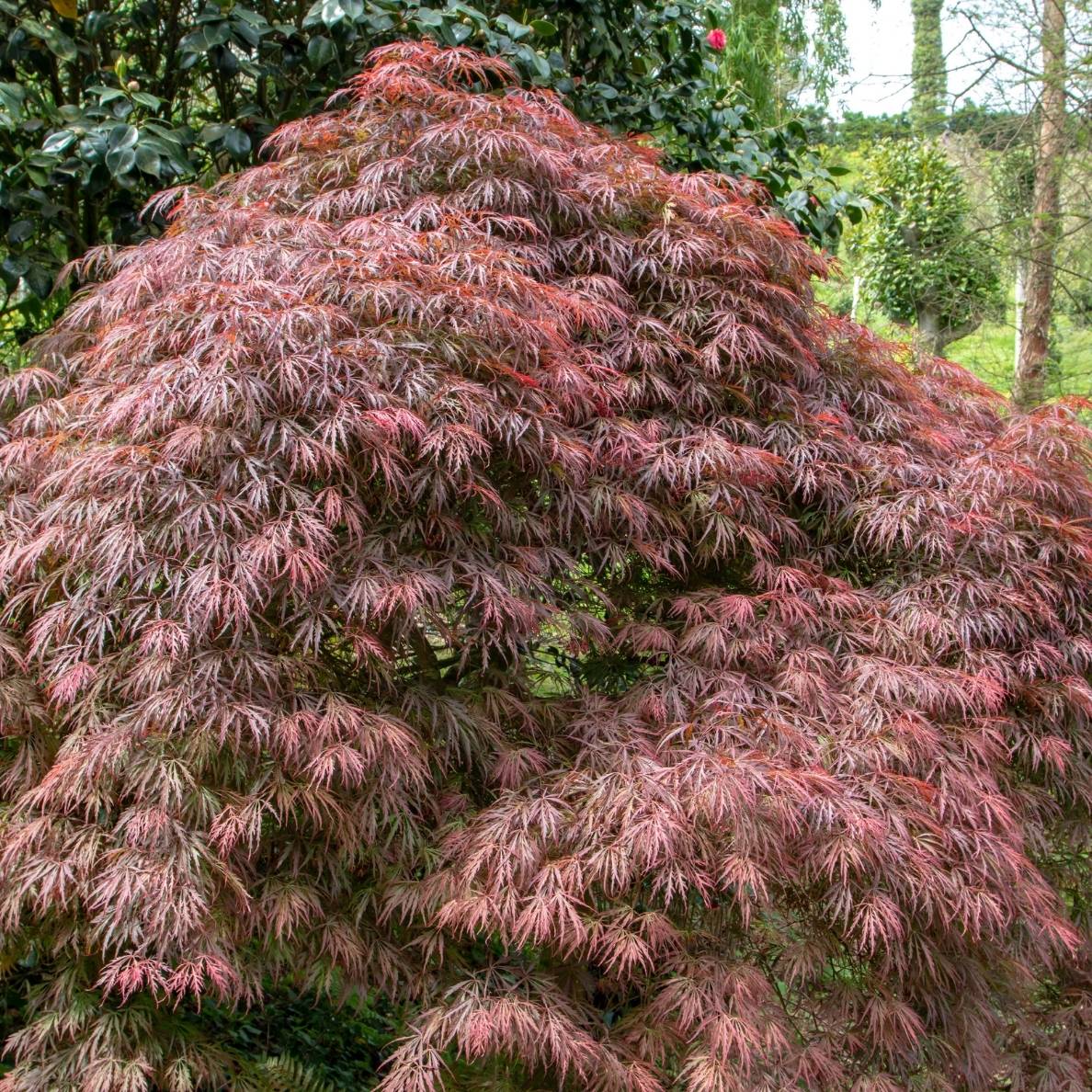
Weeping Japanese maples have arching or cascading branches that create a low, layered outline rather than the upright crown of a conventional small tree. They are particularly effective beside a path, above a low wall, near water or as a carefully placed specimen in a sheltered garden. Before choosing one, compare its foliage colour, leaf shape, eventual spread and whether it forms a broad mound or a more strongly trailing plant.
The collection includes green-leaved forms such as Acer palmatum ‘Viridis’ and ‘Emerald Lace’, together with darker cultivars including ‘Garnet’, ‘Crimson Queen’, ‘Red Dragon’ and ‘Tamukeyama’. ‘Orangeola’ is valued for foliage that develops changing warm tones through the growing season.
Many weeping cultivars are also laceleaf Japanese maples, with finely divided foliage that adds movement and texture. Others, such as ‘Ryusen’, combine a strongly pendulous habit with broader palmate leaves. The mature outline depends on the cultivar, its growing conditions and how the young framework is trained, so it is worth considering both height and width before planting.
Growth Habit and Garden Uses
A weeping maple usually develops a central framework from which branches arch outward and down. Some form compact domes close to the ground, while others can be encouraged to gain more height before their stems cascade. The height at which the main branches begin to fall has a considerable effect on the final appearance.
These maples are best placed where their entire shape can be seen. A position at the front of a deep border, on a gentle slope or beside an open lawn allows the descending branches to remain visible. They also combine well with ferns, hostas, low grasses and woodland perennials, provided neighbouring plants do not grow through the maple’s canopy or compete heavily for moisture.
Allow enough horizontal space for the branches to spread naturally. A weeping maple planted tightly between vigorous shrubs may gradually lose its distinctive outline and require unnecessary pruning. Keep paths, doors and frequently used seating areas clear of branches that are likely to descend as the tree matures.
Foliage Colour and Seasonal Interest
Finely divided leaves can create a soft, almost feathery canopy. Green cultivars often provide fresh spring growth and strong yellow, orange or red autumn colour, while red and purple forms may move through several shades between spring and leaf fall. The exact colour varies with cultivar, light, weather and the stage of the season.
Red foliage may appear greener where the tree receives very little light, while delicate leaves can scorch in a hot, exposed position. In many Irish gardens, the best balance is a bright site with shelter from strong wind and some protection from intense afternoon sun. A few hours of gentle sun can help colour development without subjecting the foliage to prolonged heat.
Leaf scorch usually appears as dry brown margins or tips. It can result from wind, sudden heat, dry roots or reflected warmth from paving and walls. It does not always indicate a pest or disease. Improving shelter and maintaining even soil moisture is often more useful than applying a treatment.
Planting and Growing in Pots
Plant in fertile, humus-rich soil that holds moisture but drains freely. Japanese maples dislike ground that remains saturated through winter, and they also struggle where roots repeatedly dry during spring and summer. Improve a broad planting area with well-rotted organic matter and avoid creating a small compost-filled pocket surrounded by compacted soil.
Water thoroughly after planting and continue during dry periods while the root system establishes. Apply a mulch over the root area to conserve moisture, keeping it clear of the trunk. A sheltered position is especially important for laceleaf forms because their fine foliage loses moisture quickly in persistent wind.
Compact weeping maples can grow successfully in containers when the pot provides adequate root room, drainage and stability. Use a substantial frost-resistant container and check moisture regularly. Container compost can become dry beneath the surface even after light rain, but the pot should never remain permanently waterlogged.
Pruning and Long-Term Care
Pruning should be light and selective. Remove dead, damaged, crossing or badly placed branches, but avoid clipping the canopy into a rigid dome. The layered framework is part of the plant’s character and develops more naturally when unnecessary cutting is avoided.
Do not prune heavily in late winter or early spring when sap is beginning to rise, as maples can bleed from fresh cuts. Small corrective work can be carried out during summer or after leaf fall in suitable dry weather. Larger branches should be removed only when necessary because mature maples do not always respond well to severe renovation.
Feed modestly in spring where soil is poor or the plant is container-grown. Excessive fertiliser can encourage soft growth that is more vulnerable to wind and scorch. Explore the wider Japanese maple collection to compare weeping trees with upright, dwarf, green and red-leaved forms.