Choosing and Growing Oakleaf Hydrangeas in Ireland
Choosing an Oakleaf Hydrangea
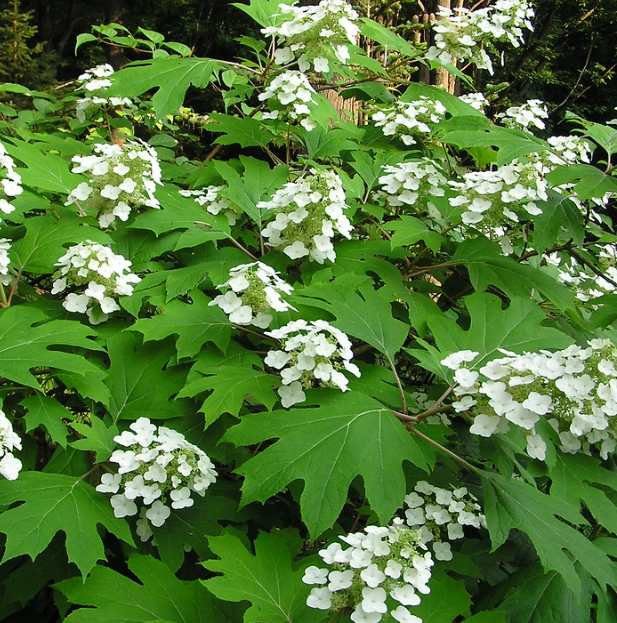
Oakleaf hydrangeas are distinctive deciduous shrubs grown for much more than their flowers. Their deeply lobed leaves resemble those of an oak, while cone-shaped summer flower clusters, rich autumn foliage and textured older stems provide interest across several seasons. They suit gardeners looking for a substantial woodland-edge or mixed-border shrub rather than the traditional rounded appearance of a mophead hydrangea.
Most belong to Hydrangea quercifolia, but the cultivars vary in mature size, flower form and autumn colouring. Larger selections include Hydrangea quercifolia ‘Alice’ and ‘Snow Queen’, while ‘Munchkin’ offers a more compact habit. Other choices include ‘Ruby Slippers’, ‘Snowflake’, ‘Ice Crystal’ and ‘Burgundy’.
Check the expected height and spread before planting. Some oakleaf hydrangeas develop into broad, architectural shrubs and need considerably more space than their container size suggests. Compact cultivars are easier to use in smaller gardens, near paths or in large containers, although they still need adequate root room and dependable moisture.
Flowers, Foliage and Autumn Colour
The flower heads are generally elongated rather than rounded, creating a looser and more natural effect. They commonly open in pale tones and may gradually develop pink, rose or muted brown shades as they age. The exact colour progression depends on cultivar, weather and the stage of the flowers.
The foliage is one of the main reasons to grow this group. Large, lobed leaves form a bold backdrop during spring and summer, then may develop shades of red, bronze, burgundy or purple in autumn. The strength and duration of autumn colour vary with cultivar, light levels, temperature and growing conditions.
Older stems can develop peeling or textured bark that becomes more visible after leaf fall. Leaving faded flowers in place through autumn can extend the display, although damaged or untidy heads may be removed after flowering. The combination of foliage, flowers and winter framework makes oakleaf hydrangeas particularly useful where year-round structure matters.
Where to Plant Oakleaf Hydrangeas
Oakleaf hydrangeas grow well in sun or partial shade, but the balance of light and moisture is important. A brighter position can encourage stronger flowering and autumn colour, provided the soil does not become excessively dry. In warmer or exposed gardens, light afternoon shade may help prevent foliage scorch and reduce water stress.
Choose fertile, humus-rich soil that holds moisture but drains well during winter. These shrubs dislike prolonged waterlogging and may struggle in heavy compacted ground that remains saturated. Improve the wider planting area with organic matter and avoid creating a small isolated pocket of compost surrounded by poorly drained soil.
A sheltered position is useful because large leaves and flower panicles can be damaged by persistent wind. Oakleaf hydrangeas work well beside a lightly shaded boundary, within a broad mixed shrub border or near the edge of an informal woodland planting. Avoid narrow spaces where their spreading branches would need repeated hard restriction.
Planting and Establishment
Plant at approximately the same depth as the original root ball and loosen the surrounding soil so roots can move outward. Water thoroughly after planting and apply a mulch over the root area, keeping it clear of the lower stems. The mulch helps maintain the cool, evenly moist conditions preferred during establishment.
Water regularly through dry periods during the first growing seasons. Once well established, oakleaf hydrangeas may cope with occasional dryness better than some large-leaved mophead types, but they should not be treated as drought-tolerant shrubs. Prolonged dry conditions can cause leaf scorch, reduced growth and smaller flowers.
Container-grown plants need a substantial pot with good drainage and a moisture-retentive growing medium. Compact cultivars are the most practical choice. Pots should not be allowed to dry completely, particularly while flower heads and large leaves are developing.
Pruning Oakleaf Hydrangeas
Oakleaf hydrangeas generally flower on established wood, so routine hard pruning in late winter can remove developing flower buds. Prune lightly after flowering when necessary, concentrating on dead, damaged, weak or badly positioned stems. A well-sited plant usually needs little more than gradual shaping and occasional renewal.
Older shrubs can be rejuvenated by removing one or two of the oldest stems near the base rather than cutting the entire plant down. This preserves much of the flowering framework and avoids producing a dense flush of soft replacement growth all at once.
Allow the natural layered structure to develop rather than clipping the shrub into a tight formal shape. Explore our complete hydrangea range to compare oakleaf hydrangeas with smooth, panicle, mophead, lacecap and climbing varieties.