
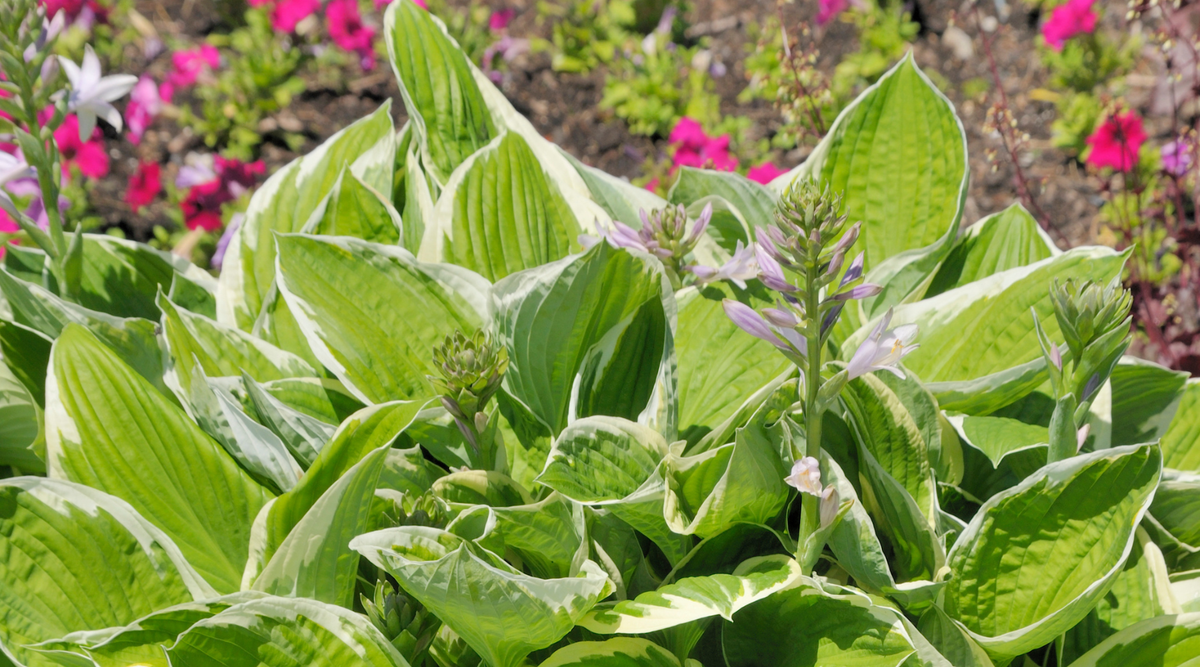
Hostas are associated with shade, but shade is not the same as darkness and many varieties grow better with some direct light. In Irish gardens, morning sun or a few hours of gentle sun can produce compact growth, stronger yellow and gold colouring and more flowers, provided the roots have enough moisture.
The important question is not simply how many hours of sun a hosta receives. Leaf thickness, colour, wind exposure, soil moisture and the intensity of the light all affect how the plant responds.

Why hostas are usually grown in shade
Shade keeps the air and soil cooler and reduces water loss from the foliage. That suits a plant with a large leaf area and explains why hostas often make bigger, darker leaves in sheltered shade. It does not mean they require deep shade. Most still need good indirect light to grow strongly.
If you are unsure what sort of shade your garden actually has, the guide to full, part, dappled and deep shade is a useful starting point.
Moisture decides how much sun a hosta can handle
Direct sun increases transpiration, so the plant must replace water through the roots quickly enough to keep the leaves cool and turgid. In a moisture-retentive soil, a hosta may cope well with a bright position that would scorch the same variety in a dry border. Wind increases the demand further because moving air strips moisture from the leaf surface.
This is why a blanket rule such as “two hours of sun” is only a starting point. A sheltered east-facing bed in moisture-retentive soil is very different from an exposed west-facing border that dries rapidly.
Which hosta leaves cope best with brighter positions?
Thicker leaves generally lose water more slowly and are often more tolerant of direct light than thin leaves. Green and many yellow or gold hostas can perform well with some sun, while blue-leaved plants usually keep their best glaucous surface in cooler shade. White or cream areas contain less chlorophyll and can be the first parts of a variegated leaf to scorch.
There are exceptions to every colour rule, so colour alone should not decide the position. The separate guide to choosing hostas by colour, size and habit is more useful than treating all blue, gold or variegated plants as identical.

Morning sun is usually easier than hot afternoon sun
A position that receives sun early in the day and shade later is often a good compromise. The plant gets enough light for strong growth without facing the highest afternoon temperatures. Gold and green foliage may colour well in these conditions, while many variegated plants keep better leaf quality than they would in a hotter west-facing position.
Irish summers are often mild enough for hostas to tolerate more light than the stereotype suggests, but exposed coastal or windy gardens can still scorch foliage because wind and sun act together. Shelter remains useful even where the air temperature is not especially high.
Signs that a hosta is getting too much sun
- brown, dry leaf margins, especially after a warm or windy spell;
- bleached or scorched white sections on variegated leaves;
- papery dead patches within the leaf;
- loss of the blue bloom on glaucous foliage;
- wilting while the surrounding soil is dry;
- a plant that becomes smaller or goes into decline earlier than comparable hostas in cooler positions.
These symptoms can overlap with drought, wind scorch and overfeeding, so inspect the whole site before moving the plant. Our guide to yellow and brown hosta leaves helps separate the main causes.
What about full sun?
Some robust hostas can tolerate sun for a substantial part of the day when the soil stays reliably moist and the site is sheltered. That is different from saying that all hostas are full-sun plants. The best foliage is usually achieved by giving the plant enough light to colour and flower well while avoiding prolonged heat and dryness.
If the only available position is bright, improve the soil before planting, mulch to slow water loss and watch the plant during its first full growing season. A hosta that repeatedly scorches despite good watering is telling you that the site is wrong for that cultivar.
Can hostas grow in deep or dry shade instead?
Deep shade can reduce vigour and flowering, while dry shade under trees presents the separate problem of root competition. A hosta may survive there once established, but survival and good foliage are not the same thing. Where the soil is dry because of trees or shrubs, see how to grow hostas in dry shade and under trees.
Choosing hostas for a brighter garden
Start with vigorous plants with reasonably substantial leaves, then assess the site rather than chasing a supposedly “sun-proof” name. If you want stronger yellow or gold foliage, gold and yellow hostas are worth considering, but they still need moisture and some varieties are more light-sensitive than others. The broader Hosta collection gives more choice across leaf colours and mature sizes.
Frequently asked questions
Can hostas take morning sun?
Many can, and morning sun with afternoon shade is one of the most useful positions for hostas in Irish gardens.
Will blue hostas grow in sun?
Some will grow, but direct sun can reduce the powdery blue bloom that gives the foliage its colour. Cooler shade generally preserves the blue effect for longer.
Why is only the white part of my hosta burning?
White tissue contains less chlorophyll and is often more vulnerable to strong light and water stress than the green part of the same leaf.
Should I move a scorched hosta immediately?
First check soil moisture and exposure. If the plant is repeatedly scorched despite adequate water, moving it to a cooler position is sensible. The complete guide to growing hostas in Ireland covers the wider siting and soil requirements.


